
Hi there
I’ve been thinking a lot about knees lately, mine, my clients’ and maybe yours too.
Because knee pain has a way of sneaking up on us. It doesn’t usually happen all at once. It shows up quietly… when you walk downstairs, when you stand up from the couch, or when you finally decide to go for a run after some time away.
And so many clients tell me the same thing:
“I didn’t do anything wrong. So why does my knee hurt?”
Here’s what I want you to know:
It’s not because you’re broken. And it’s not because you’re getting older.
More often than not, it’s because our tendons have adapted to a life that’s become more sedentary over time.
As we move into our 40s and 50s, we tend to sit more, move less, and repeat the same limited ranges of motion.
Even if you’re exercising regularly, most workouts live in the middle of a movement, rarely exploring the shorter and deeper ranges where tendons actually build strength and resilience.
And tendons are different from muscles.
They don’t respond well to quick faster movements when they haven’t been trained well.
They respond to pressure, tempo, and consistency.
I learned this in a very personal way.
Years after my ACL surgery, I had accepted that my knee would always feel a certain way. There was cracking, popping and pain. And a deep groove over my patellar tendon where tissue had been removed. I assumed that was just how it was going to be.
But after a year of slower intentional full-range work like split squats, slant board squats and short-range knee loading, I noticed something that stopped me in my tracks.
That groove?
It had started to fill in.
My tendon had changed.
The knee popping and pain improved too! And my knee that could barely bend 90 degrees now can bend completely full range.
I never thought this could be possible in my 50’s.
That moment completely reshaped how I think about knee pain, healing, and what’s actually possible at this stage of life.
Our tendons are viscoelastic. Which means they can stiffen when we don’t move or move too quickly without training them properly.
But they can also soften, lengthen and remodel when we give them the right kind of stimulus. Slow movement. Gradual load. Repetition over time.
This is why going from “mostly sedentary” to “full throttle running” often leads to knee pain, shin splints, or plantar fasciitis. It’s not the running—it’s the lack of a foundation underneath it.
The work starts small and consistent.
Backwards walking.
Patrick steps.
Ankle and toe raises.
Not glamorous—but incredibly powerful.
Those lower-leg muscles and tendons act like shock absorbers. And when they’re weak or stiff, the knee ends up taking the hit. (Ask me how humbled I was the day I realized I could barely do 20 ankle raises.)
When we rebuild strength from the ground up, short range first, then mid range, then full range, something really beautiful happens. Knees stop bracing. Movement starts to feel fluid again. Confidence returns.
And this is what I love helping my clients with.
It’s also exactly what I talk about in the latest podcast episode, where I share more of my own story and walk you through how tendon ability can change the way your knees feel—now and long-term.
And if you’re local to Portland and want hands-on guidance, I’m also teaching a 6-week small group series called Knee Ability for Runners, starting January 7th.
We’ll move slowly, intentionally, and build real knee resilience together.
No rushing. No fixing. Just rebuilding trust in your body.
If your knees have been whispering—or shouting—at you lately, I hope this gives you a little clarity and a lot of hope.
You’re not behind.
Your body is listening.
And it’s capable of more than you think.
Let’s step into the new year with a new view of what our body’s potential could be.
In health and happiness,
Allison
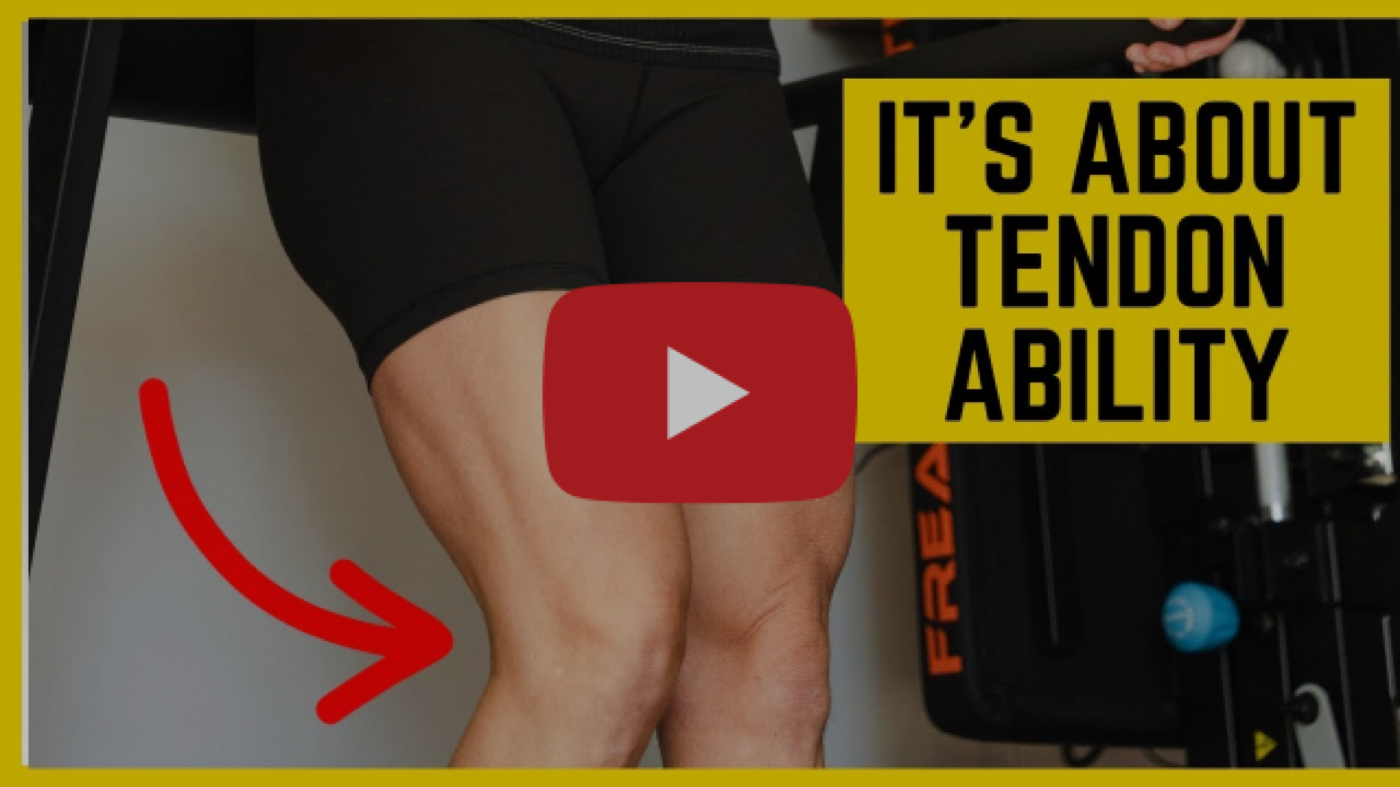
Here’s my latest video demonstrating some of the exercises I talk about in this podcast episode.
Keep Reading
Back to the blog